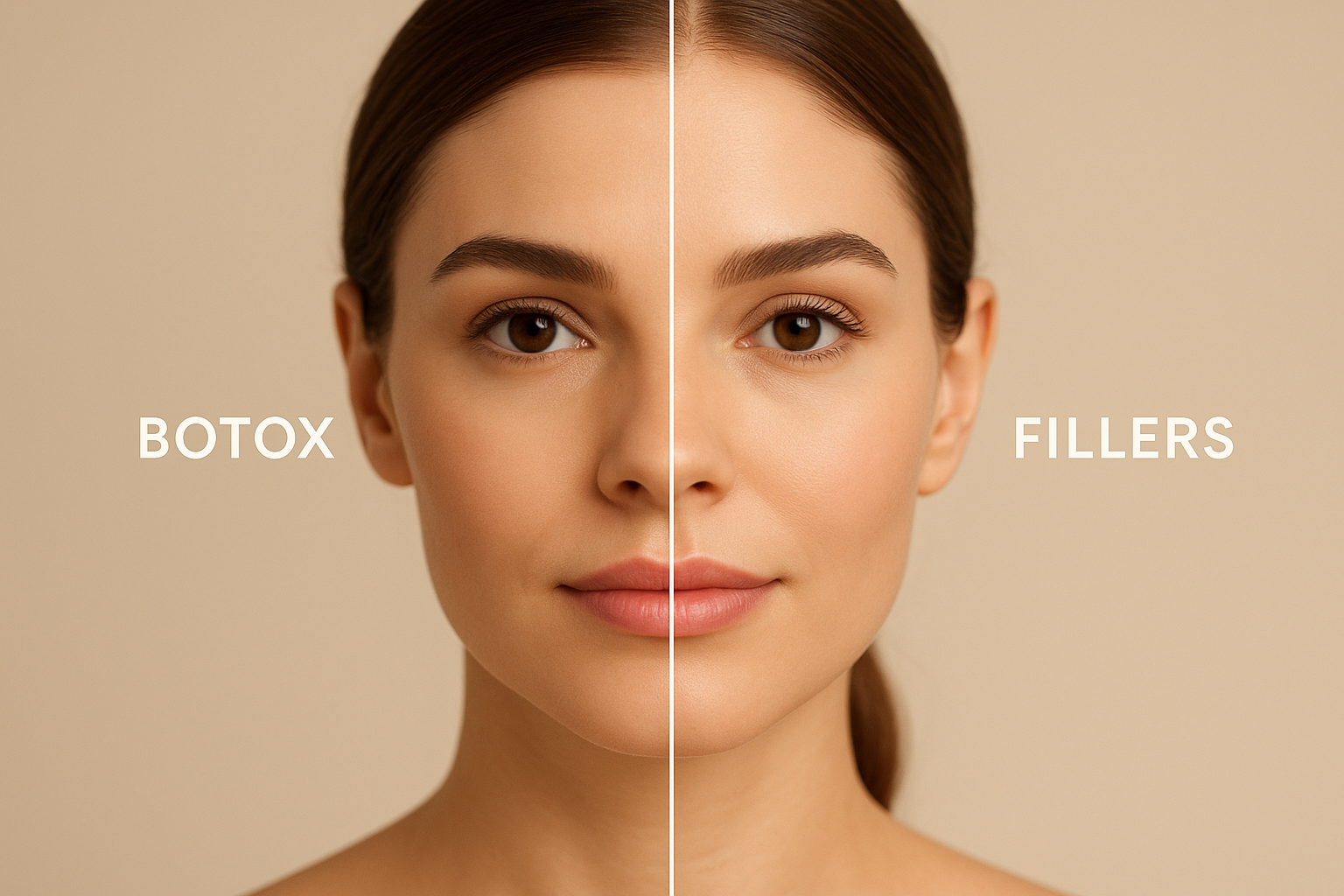
Botox vs Fillers: Key Differences Explained
Botox and dermal fillers are two of the most popular cosmetic treatments for addressing signs of aging, but they work in completely different ways. Here's a quick breakdown:
Botox: Best for reducing dynamic wrinkles caused by facial muscle movement (e.g., crow's feet, forehead lines). It relaxes muscles to smooth wrinkles and prevent new ones. Results appear in 3–5 days and last 3–4 months.
Dermal Fillers: Ideal for restoring lost volume and minimizing static wrinkles (e.g., nasolabial folds, marionette lines). Fillers use hyaluronic acid to plump skin and enhance facial contours. Effects are immediate and can last 6–18 months.
Choosing between Botox and fillers depends on your specific concerns. Botox targets wrinkles from muscle movement, while fillers focus on volume loss and static lines. In many cases, combining both can yield optimal results. Always consult a board-certified professional to ensure safety and effectiveness.
How Botox and Fillers Work
Botox and dermal fillers both tackle signs of aging, but they do so in completely different ways. While both treatments aim to rejuvenate your appearance, their methods and effects vary significantly.
Botox: Relaxing Muscles to Smooth Wrinkles
Botox focuses on relaxing specific facial muscles by temporarily blocking the nerve signals that make them contract. The active ingredient, botulinum toxin type A, is a purified protein that reduces the intensity of these contractions.
Dermal Fillers: Restoring Volume and Contours
Dermal fillers take a completely different approach by adding volume beneath the skin. Instead of targeting muscle movement, fillers work to restore lost fullness caused by aging and gravity.
Conclusion
Knowing the differences between Botox and dermal fillers is essential for choosing the treatment that aligns with your aesthetic goals. Botox focuses on relaxing muscles to smooth out dynamic wrinkles, like crow's feet and forehead lines, while dermal fillers restore volume to enhance facial contours and address areas like the cheeks or lips.